
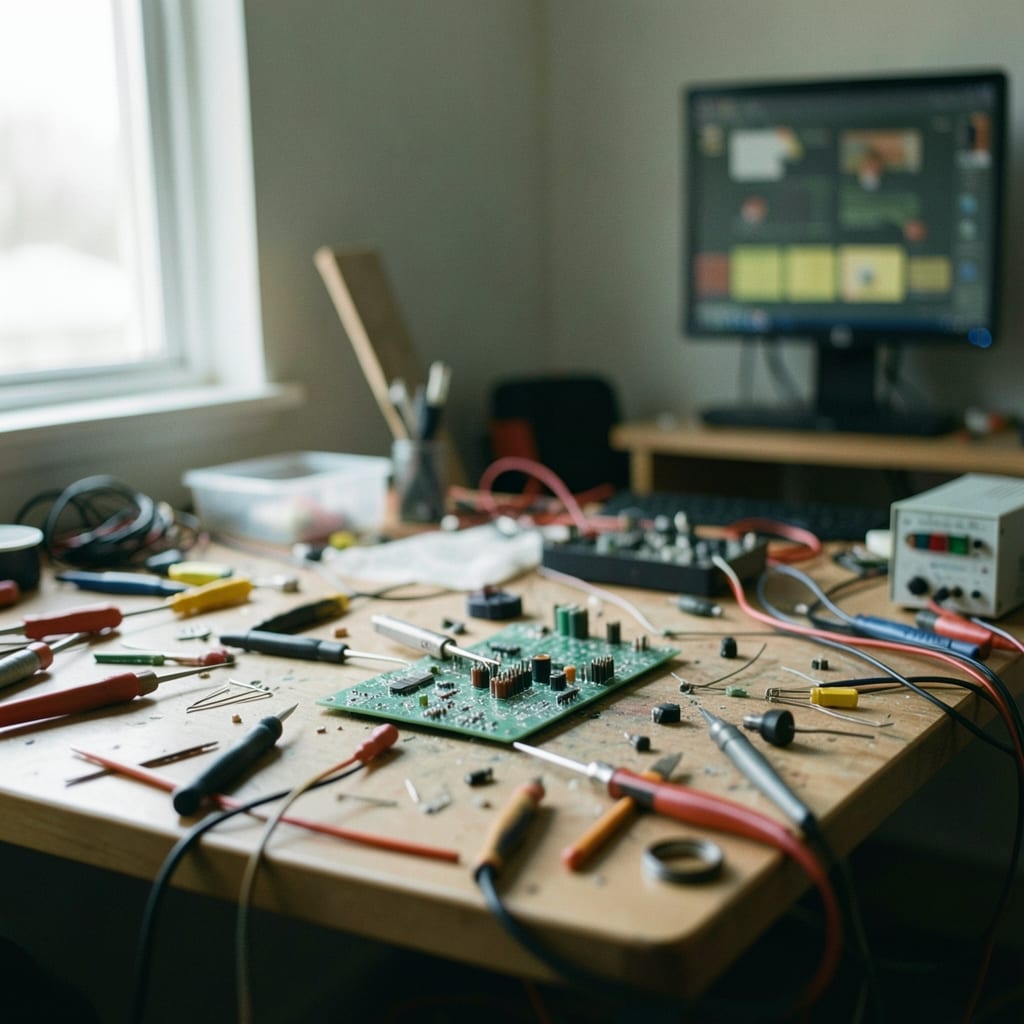
It started with one Windows update that refused to install
It was October 2008, and my 486’s whirring fan was already struggling to keep up with the heat. I’d just downloaded Windows 98 SE from a friend’s floppy disks, and the installation kept crashing at 87%.
The screen would flicker, the CD-ROM would eject itself mid-copy, and the system would reboot before the setup could finish. I’d run the disk check utility, defragmented the hard drive, even tried a different power supply—nothing worked. The error logs just said ‘aborted’.
The worst part? The machine *looked* like it was working. The BIOS test passed. The RAM check came back clean. The floppy drive spun up when I inserted a disk, but the second I hit ‘Next’ in the installer, the whole thing would stall.
I’d spent hours reading forums where people swore by ‘cleaning the IDE cables’ or ‘disabling ACPI in the BIOS’—none of it applied to a machine this old. I was stuck in a loop of half-installed operating systems and dead ends.
I remember sitting there with a screwdriver in hand, staring at the motherboard like it had personally offended me. The machine had been running fine for years—until I tried to upgrade it. That’s when I realised: tech problems aren’t just about broken parts.
They’re about the gap between what the manual says and what actually happens in your specific kitchen—your specific desk, your specific power outlet, your specific luck with static electricity.
Nine attempts before it finally stuck
The first five tries were all variations of ‘clean the hardware.’ I wiped the CD with rubbing alcohol, reseated the RAM, even tried a different IDE cable from an old printer.
The sixth attempt involved borrowing a friend’s Windows 98 boot disk and using FDISK to repartition the drive from scratch—that failed when the format utility crashed at 42%.
The seventh time, I gave up on the CD and copied the files to a USB drive (a rare luxury back then), but the installer still choked halfway through.
Then I read about a tool called ‘Win98SE Fix’ that patched the installer for common hardware quirks. It worked—until the system rebooted and the screen stayed black. Turns out, the fix had corrupted the VGA drivers.
The eighth attempt was a full reformat with a different partition table, but the BIOS wouldn’t recognise the new setup. Finally, on the ninth try, I disabled the cache in the BIOS and used a generic VGA driver instead of the default. It installed. The machine rebooted.
And for the first time in weeks, I saw the desktop.
But the victory was hollow. The system was slow, the drivers were unstable, and I still didn’t know *why* it had taken nine tries. What I *did* learn was that no two machines behave the same way—even when they’re the same model.
The ‘official’ steps never accounted for the 486’s particular quirks, the dust in its fans, or the fact that its power supply was on its last legs.
That’s when I decided to document every single attempt, every error code, and every workaround—not just for me, but for anyone else stuck in the same loop.
The mind behind these pages

That stubborn 486 was mine. I’d inherited it from an uncle who’d taught me that computers weren’t magic—they were just machines with rules you had to figure out. By the time I gave up on Windows 98, I’d spent 40 hours on that one update.
That’s when I realised most people never get past the first crash. They assume the problem is them, not the instructions.
I’ve spent the last decade doing the same thing nine times: writing a guide, testing it on three different setups, then rewriting it after real users hit snags. It costs time, it costs patience, and it means I’ll never be the fastest person in the room.
But it’s the only way to turn ‘here’s how it *should* work’ into ‘here’s how it *actually* works for you.’ My editor calls it ‘obsession’; my uncle called it ‘paying your dues.’
I also collect vintage computer parts—floppy drives, CRT monitors, the kind of hardware that makes people laugh when I pull it out of a box. There’s a satisfaction in fixing something that was declared ‘obsolete’ years ago.
It’s the same feeling I get when a troubleshooting guide finally clicks for someone who’s been stuck for weeks.
This site exists because that 486 didn’t give up on me. And neither will these pages.
Everything here is written the way that Windows install was
Every guide you’ll find here started as a mess. The first draft of a Linux setup tutorial might work perfectly on my test machine, but fail on a laptop with an AMD chip. The second draft adds notes about that. The third draft tests it on a Chromebook.
The fourth draft—well, let’s just say we’ve seen what happens when you assume Wi-Fi drivers are universal.
We don’t just write down the steps that work. We write down the ones that *almost* work, the ones that work for 80% of people, and the ones that only work if you’re willing to risk bricking your device. That’s the part most tutorials skip.
And that’s the part that actually helps.
Six months after a guide is published, we pull it back, test it again, and update it. Hardware changes. Software changes. Your aunt’s ‘borrowed’ router changes. The only thing that shouldn’t change is whether the steps still lead somewhere.
That’s why every page here has a ‘last tested’ date—and why we’d rather admit a guide is outdated than let someone waste 40 hours on a dead end.
What that means for you
You’ll find no ‘just reboot’ advice here. No ‘it works on my machine’ excuses. And no fluffy explanations of *why* something *should* work—only the steps that *do* work, tested on machines that aren’t perfect lab specimens.
What you *won’t* find are paywalls, affiliate links disguised as reviews, or guides that assume you’re a tech professional. If we can’t explain it in plain English—or if it took us nine tries to get it right—we don’t publish it.
There’s one more thing: if you’ve ever hit a dead end with a guide, we want to know. Not to argue, not to debate—just to add another data point. Send us the error code, the machine specs, and what you tried.
It might not fix your problem today, but it could save someone else 40 hours tomorrow.
We’re building a library of real-world workarounds. If you’ve found a solution that isn’t in our guides—or if you’ve hit a snag we haven’t covered—tell us about it. The details matter: the exact error message, the OS version, the hardware. Even if it’s a problem we haven’t solved yet, your note might be the missing piece.
The guides are grouped by category: App, Coding, Hardware, Operating System, Outlook and PowerPoint.