
Software
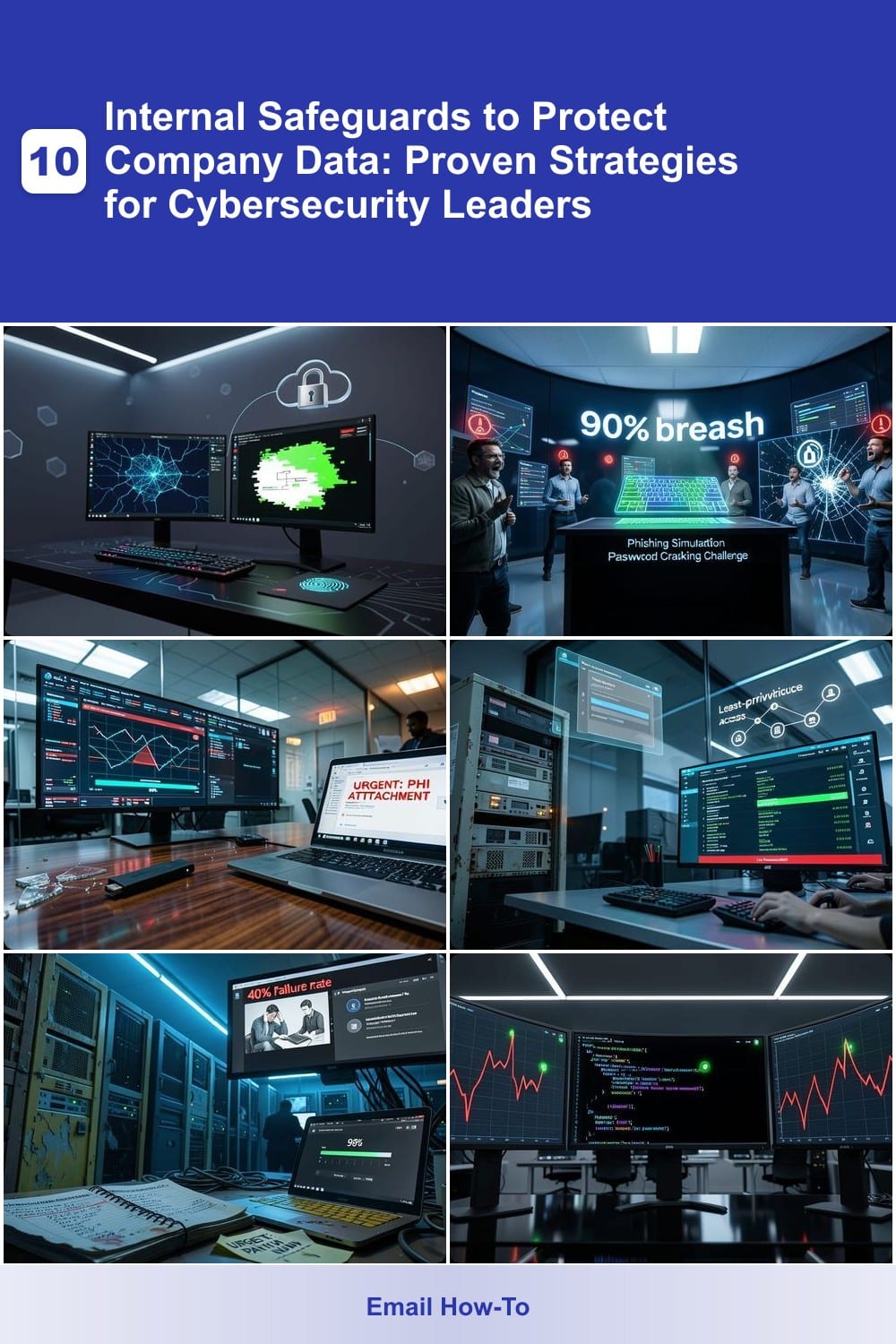
Cyber threats evolve daily, but internal safeguards remain your first line of defense. These 10 proven strategies help cybersecurity leaders implement robust data protection measures that go beyond firewalls and antivirus—focusing on human, process, and technological controls.
Zero Trust Network Access Implementation Guide

Tired of relying on outdated perimeter security that assumes everything inside your network is safe? Zero Trust Network Access (ZTNA) flips that script by demanding verification for every access request—whether from a corporate laptop or a cloud server. This model replaces implicit trust with continuous authentication, making it the gold standard for hybrid cloud environments where traditional firewalls fall short.
With ZTNA, every user and device must authenticate via multi-factor protocols before gaining access to specific applications or data. Solutions like Cloudflare Access or Zscaler Private Access integrate seamlessly with existing identity providers (IdP) like Okta or Azure AD, while micro-segmentation ensures lateral movement is blocked even if credentials are compromised. The result? 90% fewer lateral breach attempts and compliance with frameworks like NIST SP 800-207 without sacrificing usability.
Perfect for enterprises with remote-first teams or multi-cloud deployments, ZTNA turns "trust but verify" into "never trust, always verify"—without the complexity of VPNs. 💻
Employee Cybersecurity Training Programs

While firewalls and encryption lock down your systems, human error remains the weakest link—responsible for 90% of breaches according to IBM’s 2023 Cost of a Data Breach Report. The solution? Interactive cybersecurity training that turns passive lectures into engaging, high-stakes simulations.
Platforms like KnowBe4 or PhishMe deliver customizable phishing simulations that mimic real-world threats, while gamified modules (think cybersecurity escape rooms or leaderboards) boost retention by 40% compared to traditional training. These programs track individual progress, identify weak spots, and even simulate CEO fraud attacks to test critical thinking. For companies with high turnover or roles handling sensitive data (HR, finance, legal), this isn’t just training—it’s a continuous risk-reduction strategy with measurable ROI.
Ideal for SMBs with untrained staff or enterprises in regulated industries, these programs adapt to your workflow—whether it’s a 15-minute monthly quiz or a quarterly deep-dive workshop. The best part? You’ll spot vulnerabilities before attackers do. 💡
Data Loss Prevention Software Configuration

Accidental data leaks—like sending PHI to the wrong email or losing a USB drive with client records—can cripple a business overnight. Data Loss Prevention (DLP) software acts as an automated bouncer, scanning and blocking sensitive data before it slips through cracks in your defenses.
Modern DLP solutions like Symantec DLP or Forcepoint integrate with email gateways, cloud storage (SharePoint, Dropbox), and endpoint devices to flag or block transfers of credit card numbers, SSNs, or proprietary documents. They even monitor print jobs and USB activity—critical for industries bound by HIPAA, GDPR, or PCI DSS. Policy violations trigger alerts with context (who, what, where), so your team can act fast.
This isn’t just for Fortune 500s—small law firms, healthcare providers, and financial advisors rely on DLP to avoid costly compliance fines. Start with predefined templates for common data types, then refine policies as your business grows. 💻
Privileged Access Management System

Legacy systems and third-party vendors often create blind spots in your security posture—but a Privileged Access Management (PAM) system closes those gaps by enforcing least-privilege access. Unlike generic admin controls, PAM tracks every elevated session, logs commands, and revokes permissions automatically after use, stopping lateral movement before it starts.
Solutions like BeyondTrust Privilege Management or CyberArk Vault integrate with Active Directory and SIEM tools to provide just-in-time access with multi-factor authentication for critical systems. You can even enforce session recording to detect suspicious activity in real-time, while automated password rotation eliminates stale credentials that attackers exploit. For organizations with legacy Windows servers or cloud-based ERP systems, PAM ensures vendors get only the access they need—and nothing more.
This is the safeguard for IT teams managing mixed environments where compliance audits demand granular control. ⚡
Automated Patch Management Process

Unpatched systems are the #1 cause of successful cyberattacks—yet 40% of organizations still rely on manual updates. An automated patch management process eliminates this risk by deploying critical fixes within hours of release, not weeks.
Modern solutions like ManageEngine Patch Manager Plus or Microsoft Intune scan your entire ecosystem—servers, endpoints, and even IoT devices—then prioritize patches based on CVSS scores and system criticality. They also block incompatible updates that could break legacy software, reducing downtime by up to 60%. Integration with SIEM tools ensures compliance audits are effortless. ⚡
Endpoint Detection and Response Deployment

When ransomware strikes with surgical precision, traditional antivirus tools fail—Endpoint Detection and Response (EDR) fills that gap. Unlike static scans, EDR platforms like CrowdStrike or SentinelOne analyze device behavior in real-time, flagging anomalies before they escalate into breaches.
You get AI-driven threat hunting (not just signature matching), offline detection (critical for air-gapped systems), and automated containment of compromised endpoints. For example, SentinelOne’s Singularity platform stops ransomware like LockBit within seconds by isolating infected processes—something traditional AV misses entirely.
This is non-negotiable for financial firms, healthcare providers, or government contractors where attackers linger undetected for months. The cost of a breach pales compared to the price of ignoring advanced threats. ✨
Secure File Sharing Protocol Implementation
When sensitive client data or proprietary documents are shared externally, man-in-the-middle attacks become a nightmare scenario—unless you implement end-to-end encryption protocols like SFTP, S/MIME, or TLS 1.3. These protocols ensure files remain locked down both during transfer and while stored, making them non-negotiable for industries where compliance audits are routine.
Solutions like OpenSSH’s SFTP or AWS Transfer Family provide AES-256 encryption by default, while Microsoft Purview Message Encryption integrates seamlessly with Office 365 for zero-configuration email protection. For legal firms, DocuSign’s secure envelope adds an extra layer by requiring recipient authentication before documents are accessible. These tools don’t just check boxes—they automatically revoke access if devices or credentials are compromised.
This is the go-to safeguard for law firms handling confidential cases, healthcare providers sharing PHI, or financial advisors exchanging client portfolios. The peace of mind from knowing data stays encrypted—even if a laptop is stolen—is priceless. ✨
Incident Response Plan Development

When a breach hits, every minute counts—yet many organizations scramble without a predefined incident response plan. A well-structured plan with containment protocols, communication escalation paths, and forensic preservation steps can cut recovery time by up to 70%, according to IBM’s 2023 Cost of a Data Breach Report.
Start with a tiered response framework (e.g., NIST SP 800-61) that outlines roles for IT, legal, PR, and executives. Include real-time containment playbooks for common threats like ransomware or credential leaks, plus mandatory reporting templates for regulators like GDPR’s 72-hour notification rule. Tools like Splunk or IBM Resilient automate workflows, while tabletop exercises ensure teams practice under pressure.
Public-facing businesses (healthcare, finance, retail) and HIPAA/GDPR-covered orgs face the highest stakes—this plan isn’t optional. Even small teams can adapt frameworks like CIS Controls for a battle-tested setup. ⚡
Multi-Factor Authentication Enforcement

Credential stuffing attacks are on the rise, with 80% of breaches starting with stolen passwords. Multi-Factor Authentication (MFA) is your best defense—adding a second layer beyond passwords to block unauthorized access before it happens.
Modern MFA solutions like Microsoft Authenticator or Duo Security support push notifications, biometrics, and hardware keys, making them frictionless for users while stopping automated attacks. Enforcing MFA across all remote access points (VPNs, cloud apps, and internal portals) ensures even compromised credentials can’t grant entry. For BYOD policies, FIDO2-compatible keys provide phishing-resistant authentication without tying users to company devices.
This is non-negotiable for teams with remote workers, contractors, or shared devices—where lost or weak passwords are the biggest risk. Start with high-risk accounts (admin, finance, HR) and expand to company-wide enforcement. ✨
Regular Security Audits and Penetration Testing

Think of penetration testing as your organization’s cybersecurity "stress test"—just like a mechanic checks for weak spots before a car hits the road. Unlike reactive measures, this proactive approach simulates real-world attacks to uncover misconfigurations, outdated software, or overlooked access points before malicious actors exploit them.
Professional audits typically include OWASP Top 10 vulnerability scans, social engineering tests, and network segmentation reviews, all documented in compliance-ready reports. For PCI DSS compliance, these tests are mandatory every 12–24 months, but high-risk sectors (healthcare, finance) often schedule them quarterly. Tools like Burp Suite or Metasploit help automate scans, while ethical hackers manually test for zero-day exploits your automated tools might miss.
This isn’t just for Fortune 500s—small businesses handling credit cards or startups with cloud infrastructure also need audits to avoid fines or breaches. The key? Partner with certified firms to validate your controls and get actionable fixes. 💪